
A new conventional septic system in Maine typically runs $8,000 to $15,000 installed for a standard 3-bedroom home on lots that perc cleanly. Pressure-dosed systems run $12,000 to $22,000. Mound systems (required where the water table or ledge prevents conventional gravity) run $18,000 to $30,000. Fully engineered alternative systems for the toughest sites run $25,000 to $45,000+. Replacement of a failing system on a developed property typically falls in the same range as a new install but adds $2,000–$5,000 for old-system removal.

Below: what drives Maine septic costs, why some lots are far more expensive than others, and what the perc test, soils report, and Maine DEP permitting actually cost.

Maine Septic Cost: Quick Summary

System TypeTypical 2026 CostWhen It's Used
Conventional gravity$8,000 – $15,000Most lots that perc cleanly with adequate separation from groundwater
Pressure-dosed$12,000 – $22,000Marginal soils or where leach field is uphill of the tank
Mound system$18,000 – $30,000High water table, ledge close to surface, insufficient native soil
Engineered alternative$25,000 – $45,000+Toughest sites: coastal, shoreland zoning, very tight setbacks
Perc test + soils report$500 – $1,200Required for permit; licensed Maine site evaluator
Maine DEP permit$300 – $600State permit + town approval where applicable
Old-system removal$2,000 – $5,000Replacement projects only; tank pumping, removal, backfill
Septic tank pumping$300 – $600Every 3–5 years; routine maintenance

What Goes Into a Maine Septic Cost

  • Site evaluation and perc test ($500–$1,200). Licensed Maine site evaluator runs the perc, writes the soils report.
  • System design ($800–$2,500). Engineered design matched to the soil, household size, and lot constraints.
  • Permits ($300–$800). Maine DEP plus town approval where shoreland zoning applies.
  • Concrete tank ($1,500–$4,000). 1,000 to 1,500-gallon tank, properly bedded with risers brought to grade.
  • Distribution box and lines ($800–$2,000).
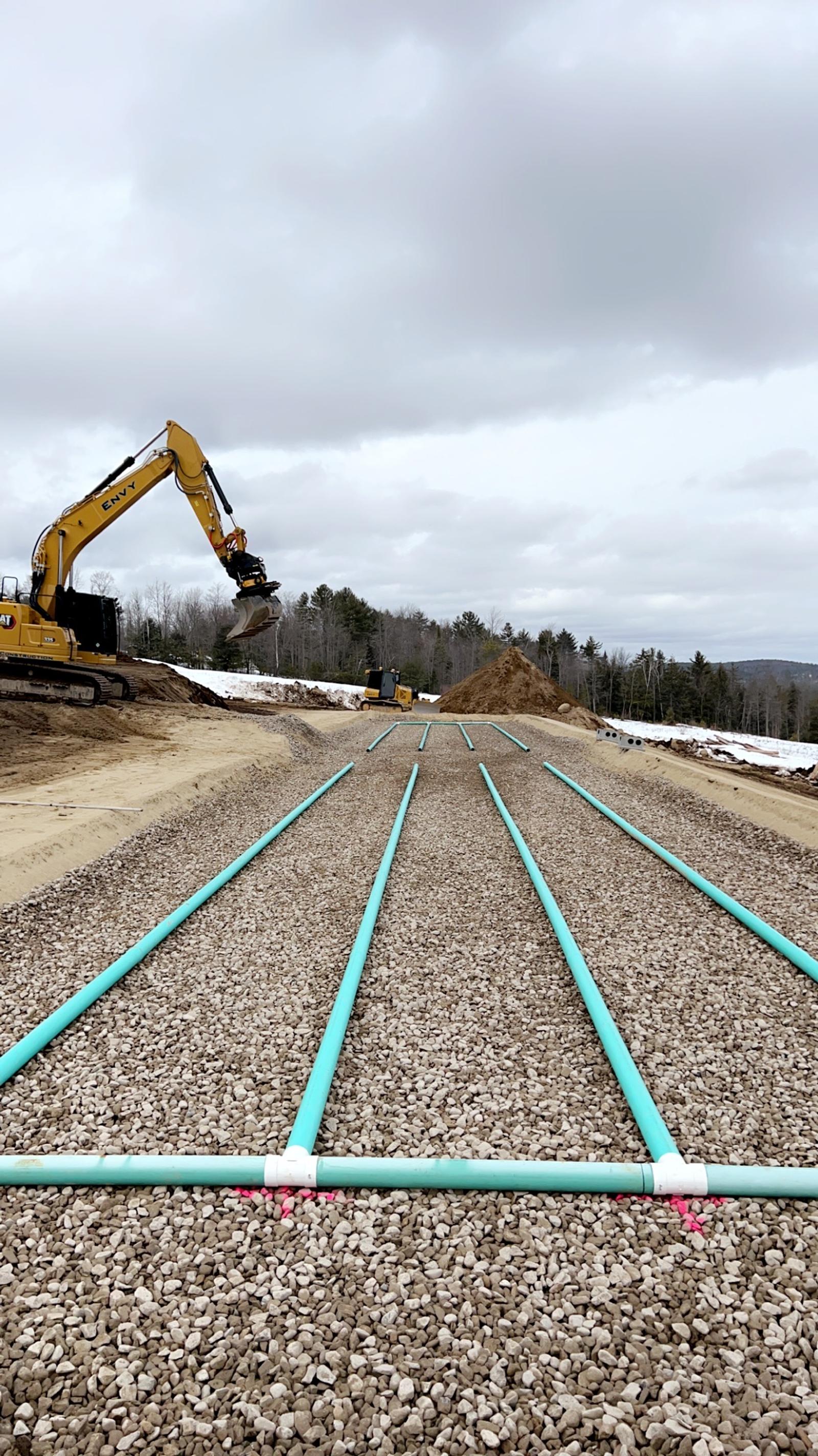
  • Leach field or chamber system ($3,000–$10,000). Frost-protected trenches, proper aggregate.
  • Mound or pressurized infrastructure ($5,000–$15,000). Pump chamber, dosing controls, mound construction where needed.
  • Final grading, backfill, as-built ($1,000–$2,500).

Maine-Specific Cost Factors

Soil conditions. Sandy, well-draining soils perc on conventional gravity at the low end of the cost range. Clay, silt, or heavy organic soils push toward pressurized or mound designs and double the cost. Water table. Required separation from groundwater is 18 inches under standard rules; coastal and marsh-adjacent properties often don't have it without a mound. Ledge. Close-to-surface bedrock has the same effect as high water table; mound or engineered system required. Shoreland zoning. Adds setback requirements and inspection rigor; can push toward engineered design. Lot size and access. Tight lots with limited access add labor cost; large rural lots are usually less expensive per square foot of leach field.

Replacement vs. New Install

Replacement is usually triggered by inspection failure at sale, system backup, or visible surface failure (effluent at grade, soggy area over the leach field, sewage smell). Replacement costs run roughly the same as new install for the system itself, plus $2,000–$5,000 for removing the old tank and lines. The complication: replacement projects often require a fresh perc test and may discover that the lot won't support a conventional system anymore (rules tightened since the original install), pushing the design to mound or engineered.

Frequently Asked Questions

How much does a septic system cost in Maine?

Conventional gravity: $8,000–$15,000. Pressure-dosed: $12,000–$22,000. Mound: $18,000–$30,000. Engineered alternative: $25,000–$45,000+.

Why are some lots far more expensive than others?

Soil conditions and water table. Lots that perc cleanly on conventional gravity sit at the low end. High water tables, ledge close to the surface, or shoreland zoning push the design to pressurized, mound, or fully engineered.

Do I need a permit?

Yes. Every new or replacement septic system in Maine requires a Maine DEP subsurface wastewater permit. Town approval is also typically required, and shoreland zoning adds another layer where applicable.

How long does a Maine septic system last?

A properly designed and installed conventional gravity system lasts 25–40 years with regular maintenance (tank pumping every 3–5 years). Mound and engineered systems require more active maintenance.

What does septic maintenance cost?

Tank pumping every 3–5 years runs $300–$600. Pump and control inspection on pressurized systems adds $200–$400 annually.

Get a Quote

Need a Septic
Quote in Maine?

Call 207-232-0351 or request a free quote. Eric Storey, VP of Excavation, walks every property before quoting.

Get a Free Quote